






MORTGAGE & REAL ESTATE INSIGHT
You are sitting across from your mortgage professional. Two fixed-rate options are on the table: three years and five years.
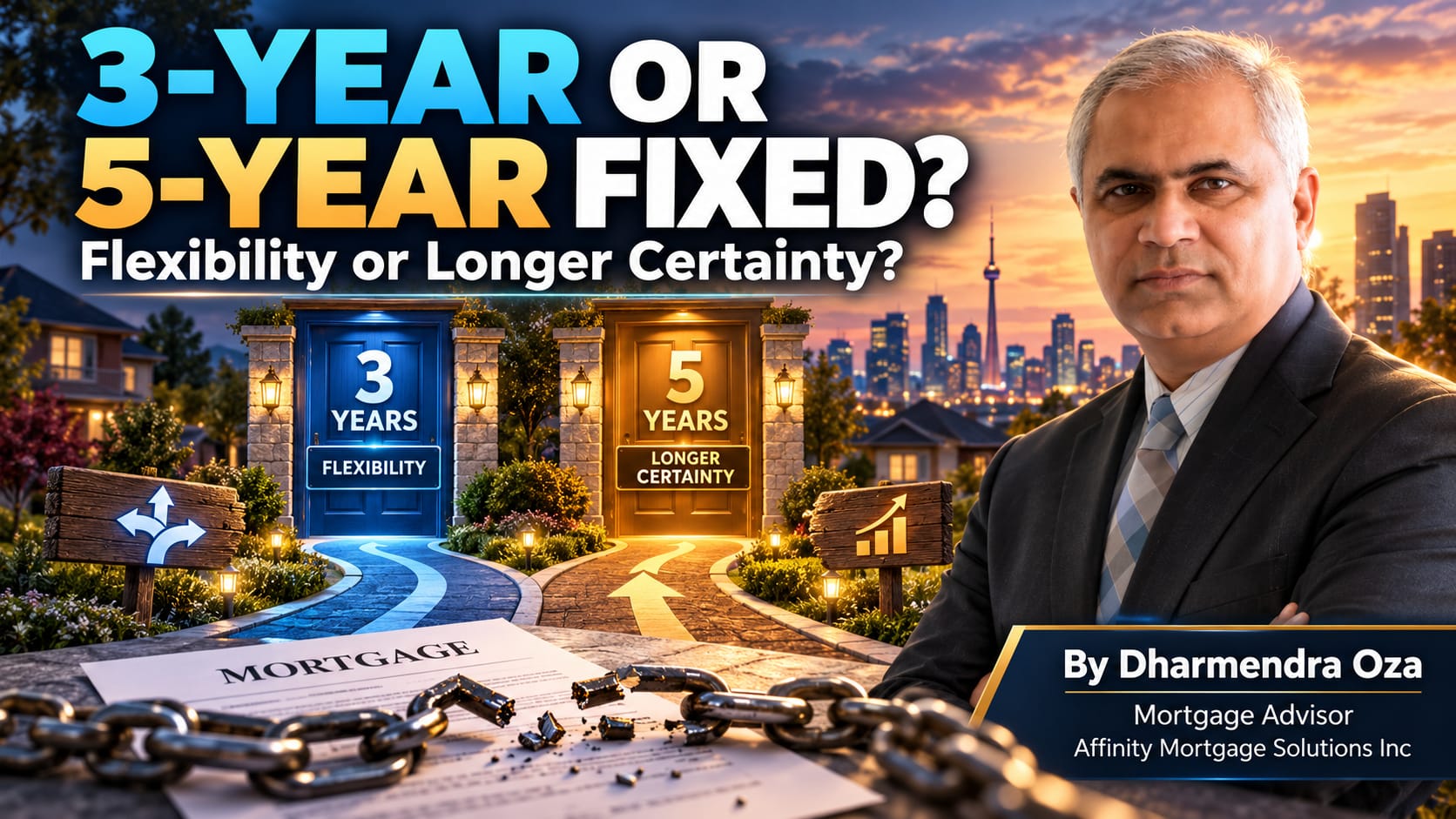
One offers flexibility sooner. The other gives you a longer period of predictable payments.
Which one should you choose?
Most people immediately compare the two interest rates. That matters—but it is only one part of the decision. Your future plans and the cost of leaving the mortgage early may matter even more.
𝗬𝗼𝘂 𝗮𝗿𝗲𝗻’𝘁 𝗷𝘂𝘀𝘁 𝗰𝗵𝗼𝗼𝘀𝗶𝗻𝗴 𝗮 𝗿𝗮𝘁𝗲. 𝗬𝗼𝘂 𝗮𝗿𝗲 𝗰𝗵𝗼𝗼𝘀𝗶𝗻𝗴 𝗵𝗼𝘄 𝗹𝗼𝗻𝗴 𝘆𝗼𝘂 𝘄𝗮𝗻𝘁 𝘁𝗼 𝗯𝗲 𝗹𝗼𝗰𝗸𝗲𝗱 𝗶𝗻𝘁𝗼 𝗮 𝗰𝗼𝗻𝘁𝗿𝗮𝗰𝘁.
𝗧𝗵𝗲 𝟯-𝗬𝗲𝗮𝗿 𝗢𝗽𝘁𝗶𝗼𝗻: 𝗣𝗮𝘆𝗶𝗻𝗴 𝗳𝗼𝗿 𝗙𝗹𝗲𝘅𝗶𝗯𝗶𝗹𝗶𝘁𝘆
A 3-year fixed mortgage protects your rate and payment for three years. When the term ends, you can renew, negotiate or move to another lender without breaking the contract early.
That shorter commitment can be valuable if your life may change.
Maybe you expect to move. Perhaps you are planning to start a family, change careers, refinance for renovations or buy a larger home. You may also believe mortgage rates could be more attractive by the time your three-year term ends.
The advantage is clear: 𝗬𝗼𝘂 𝗴𝗲𝘁 𝗮 𝗻𝗲𝘄 𝗱𝗲𝗰𝗶𝘀𝗶𝗼𝗻 𝗽𝗼𝗶𝗻𝘁 𝘁𝘄𝗼 𝘆𝗲𝗮𝗿𝘀 𝘀𝗼𝗼𝗻𝗲𝗿.
But flexibility has a risk.
If rates are higher when your three-year term ends, your next payment could increase sooner than it would under a five-year mortgage. You must be comfortable with that possibility.
A 3-year fixed mortgage may be worth considering when:
- You might sell or refinance within the next few years
- Your income or family situation may change
- You want another chance to negotiate sooner
- You can handle a different payment at renewal
- Flexibility matters more than long-term certainty
The 5-Year Option: Buying More Certainty
With a 5-year fixed mortgage, your rate and regular payment stay protected for five years.
That can make budgeting easier. You know what the mortgage will cost next month, next year and several years from now.
For a household with limited room in its budget, that certainty can be more valuable than trying to guess where rates will go.
A 5-year fixed mortgage may suit you when:
- You expect to keep the property for at least five years
- You want the same payment for a longer period
- An earlier rate increase would strain your budget
- You prefer certainty over trying to time the market
- You are unlikely to refinance or change lenders early
The downside is that five years can be a long time.
A job transfer, separation, new baby, business opportunity or unexpected financial problem could change your plans. If you need to sell, refinance or move the mortgage before the term ends, you may face a large penalty.
The Real Risk Isn’t Always the Rate
Suppose the five-year option has a slightly more attractive rate today.
It may look like the obvious winner.
But imagine selling the home after three years and paying a penalty of several thousand dollars to break the mortgage. Any savings from the lower rate could disappear quickly.
Closed fixed mortgages may carry a prepayment penalty when you sell, refinance, transfer the mortgage or repay more than your contract allows before the term ends.
The calculation can depend on the lender. It may involve three months’ interest or an interest rate differential. The method matters because two lenders offering similar rates could produce very different penalties.
Before You Sign, Ask the Lender to Show You a Real Penalty Example.
Also Ask
- Is the mortgage portable if I move?
- Can I increase my regular payments?
- How much can I pay as a lump sum each year?
- Are there restrictions on refinancing?
- Is this a standard mortgage or a restricted product?
- How does the lender calculate its interest rate differential?
These questions are not small details. They could decide whether your mortgage saves or costs you money.
Stop Trying to Win Against the Market
No one knows with certainty where mortgage rates will be three or five years from now.
Choosing a three-year term only because you are certain rates will fall is a gamble. Choosing five years only because you are certain rates will rise is also a gamble.
A better question is:
𝗜𝗳 𝗺𝘆 𝗿𝗮𝘁𝗲 𝗽𝗿𝗲𝗱𝗶𝗰𝘁𝗶𝗼𝗻 𝗶𝘀 𝘄𝗿𝗼𝗻𝗴, 𝘄𝗵𝗶𝗰𝗵 𝗰𝗵𝗼𝗶𝗰𝗲 𝗰𝗮𝗻 𝗺𝘆 𝗵𝗼𝘂𝘀𝗲𝗵𝗼𝗹𝗱 𝗵𝗮𝗻𝗱𝗹𝗲?
If you choose three years and rates are higher at renewal, can your budget absorb the increase?
If you choose five years and need to sell early, can you handle the possible penalty?
That is the comparison that matters.
𝗦𝗼, 𝗪𝗵𝗶𝗰𝗵 𝗧𝗲𝗿𝗺 𝗜𝘀 𝗕𝗲𝘁𝘁𝗲𝗿?
Choose three years when you value flexibility, expect possible life changes and can manage the risk of renewing sooner.
Choose five years when stable payments are the priority, you expect to keep the mortgage for most of the term and you do not want to face another rate decision in three years.
Do not make the choice based on a tiny rate difference alone. Ask for both options in writing and compare the payment, total interest, prepayment privileges, portability and estimated cost of breaking the mortgage.
𝗧𝗵𝗲 𝗯𝗲𝘀𝘁 𝘁𝗲𝗿𝗺 𝗶𝘀𝗻’𝘁 𝘁𝗵𝗲 𝗼𝗻𝗲 𝘁𝗵𝗮𝘁 𝗹𝗼𝗼𝗸𝘀 𝗰𝗵𝗲𝗮𝗽𝗲𝘀𝘁 𝘁𝗼𝗱𝗮𝘆. 𝗜𝘁’𝘀 𝘁𝗵𝗲 𝗼𝗻𝗲 𝘁𝗵𝗮𝘁 𝗴𝗶𝘃𝗲𝘀 𝘆𝗼𝘂 𝘁𝗵𝗲 𝗿𝗶𝗴𝗵𝘁 𝗯𝗮𝗹𝗮𝗻𝗰𝗲 𝗼𝗳 𝗰𝗼𝘀𝘁, 𝗰𝗲𝗿𝘁𝗮𝗶𝗻𝘁𝘆 𝗮𝗻𝗱 𝗳𝗿𝗲𝗲𝗱𝗼𝗺.
This article provides general information only. Mortgage products, rates and penalties differ by lender. Speak with a qualified mortgage professional before making a financial decision.